


European Day of Languages 2026 Ideas & Activities – Languages Unite!
European Day of Languages 2026: Primary School Ideas
European Day of Languages takes place on 26 September, giving schools a wonderful opportunity to celebrate languages, cultures and the many different ways we communicate with one another.
For 2026, the theme ‘Languages Unite’ offers a brilliant starting point for primary schools.
Languages can connect us to our families, our communities and people around the world. Learning even a few words in somebody else’s language can help us communicate, build relationships and become curious about lives and cultures beyond our own.
So, if you’re looking for European Day of Languages 2026 activities for primary schools, here are some simple ways to explore the idea of Languages Unite with your learners.
Looking for Primary French European Day of Languages activities? We’ve put together 10 easy French activities for European Day of Languages pack that work brilliantly for getting learners talking, moving and exploring languages.
Get your FREE French European Day of Languages Planning Pack for primary schools here!
Or explore our 10 French European Day of Languages activities for more simple classroom ideas.
🎁 Start with a Free Multilingual Resource
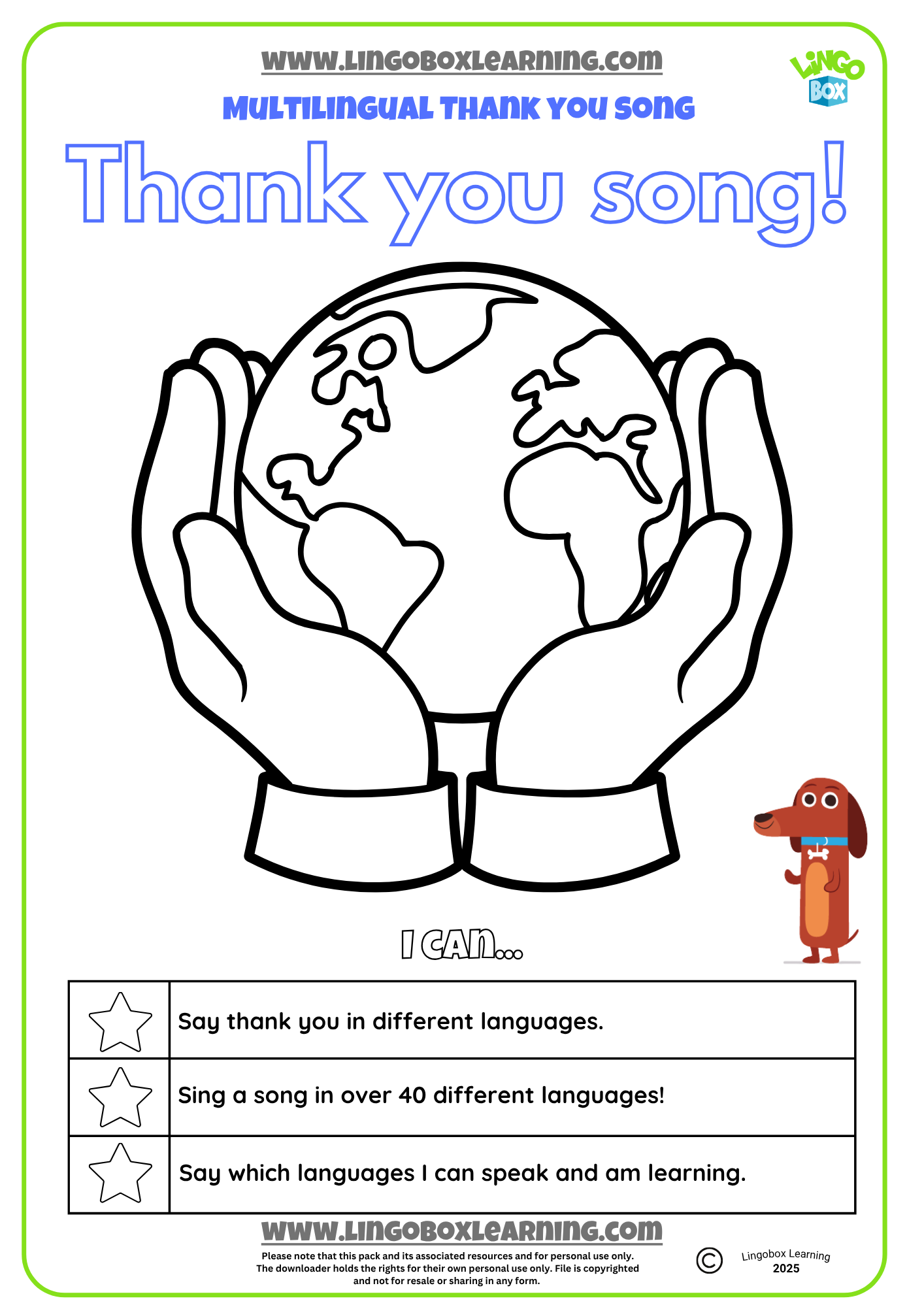
What better way to demonstrate Languages Unite than getting your whole class or school singing together in lots of different languages?
Our FREE Multilingual Thank You Song Pack includes lyrics in more than 40 languages, together with success criteria for classroom use.
Children can discover how to say thank you in languages from around the world, identify languages they already know and perhaps even help their classmates with languages spoken within their own families and communities.
It’s ideal for a class activity, European Day of Languages assembly or whole-school performance.
👉 Download your free Multilingual Thank You Song Pack
You can also find more information and activities on the official European Day of Languages website.
Looking for a complete primary French programme?
And if you’re looking for more than a one-off European Day of Languages activity, Lingobox also provides complete, progressive Primary French teaching programmes for schools, with ready-to-teach lessons, songs, videos, games, activities and planning support.
What Does ‘Languages Unite’ Mean?
Before beginning your European Day of Languages activities, ask children what they think the phrase Languages Unite might mean.
You could explore questions such as:
- How can languages bring people together?
- Why might it feel special when somebody speaks to us in our own language?
- How do languages help us learn about other people and cultures?
- Which languages connect people in our own classroom or school?
- How could knowing another language help us make a new friend?
Children don’t need to speak another language fluently to experience this connection. Sometimes a simple hello, thank you or how are you? is enough to open a conversation.
7 ‘Languages Unite’ Activities for Primary Schools
Here are seven practical activities you can use to bring the 2026 theme to life in your classroom or across your whole school.
1. Create a ‘Languages Unite Us’ Map

Start close to home by discovering the languages that already connect your school community.
Display a large map of the world and invite children and staff to add markers showing languages they:
- Speak at home
- Are learning at school
- Have family members who speak
- Have encountered while travelling
- Would like to learn one day
You could connect each marker back to your school with wool or string, gradually creating a visual representation of all the different linguistic connections within your community.
Add greetings or simple phrases beside different countries and invite multilingual children and families to contribute their own language knowledge.
By the end, you’ll have a fantastic visual demonstration of just how far the languages in one school can reach.
2. Build a Giant Multilingual Paper Chain

Create a collaborative display that literally shows languages linking people together.
Give every child a strip of coloured paper and ask them to write a word or short phrase in another language.
They might choose:
- Hello
- Welcome
- Friend
- Peace
- Thank you
- Together
- A word from a language spoken at home
Join the strips together to create one enormous multilingual paper chain.
Different classes could make individual sections before joining them together in an assembly, creating one chain representing the whole school.
It’s simple, visual and perfect for the Languages Unite theme.
3. Take the ‘One Conversation, Many Languages’ Challenge

Can your class hold one simple conversation using as many languages as possible?
Start with familiar conversational language such as:
- Hello!
- What’s your name?
- My name is…
- How are you?
- I’m good!
- Thank you!
- Goodbye!
Then see how many different languages your learners can contribute.
One child might greet somebody in French, another answer in Spanish, another contribute a Polish, Arabic, Urdu, Mandarin or Gaelic phrase from home.
The aim isn’t perfect multilingual communication. It’s to show children that languages don’t have to divide conversations — they can make them richer.
4. Discover the Words Languages Share

Languages are often much more connected than children realise.
Turn your learners into Language Detectives and investigate words that look or sound similar across languages.
If you’re learning French, you could begin with words such as:
- animal
- important
- restaurant
- chocolat
- musique
- excellent
Can children work out what they mean without being told?
Then broaden the challenge. Do children know similar words in Spanish, Italian or another language? Can multilingual pupils spot connections involving languages they know?
It’s a lovely way to demonstrate that languages aren’t isolated systems. They have travelled, borrowed from one another and developed alongside each other for centuries.
5. Create a ‘Languages Unite’ Friendship Wall

Ask each child to create a handprint, speech bubble, heart or small self-portrait containing a word or phrase that helps people connect.
For example:
- Hello
- Welcome
- Friend
- Let’s play!
- Thank you
- How are you?
Encourage children to use different languages, particularly languages represented within your school community.
Bring everyone’s contributions together under the heading:
LANGUAGES UNITE US
You could make the display interactive by adding recordings of pupils saying their phrases, QR codes linking to audio, or talking tins so other children can hear the different languages being spoken.
6. Pair Up for a Language Swap

One of the best ways to show that languages connect people is to let children teach one another.
Pair classes, groups or individual pupils and challenge each person to teach somebody else something they know.
It could be:
- A greeting
- Numbers to ten
- A playground game
- A rhyme or song
- A tongue twister
- A few words from a home language
Older pupils could prepare mini language lessons for younger classes, or multilingual pupils could volunteer to introduce a language they know.
Finish by swapping roles so everyone has the chance to be both language learner and language teacher.
7. Sing Together in 40+ Languages

Finally, bring everyone together with music.
Our Multilingual Thank You Song travels through more than 40 languages, making it a perfect fit for a Languages Unite celebration.
Rather than trying to learn every word at once, different classes could take responsibility for different sections of the song.
You could then bring everyone together for a whole-school performance, with each group contributing their languages to one shared song.
If languages unite us, there are few better ways to demonstrate it than hundreds of children using different languages while singing the same song!
🎁 Download the free lyrics and classroom resources:
👉 Get the Multilingual Thank You Song Pack
You can also explore more French and Spanish songs for children on the Lingobox Learning YouTube channel.
Take ‘Languages Unite’ Beyond One Day
European Day of Languages is a brilliant celebration, but perhaps its most important message is one we can carry into the rest of the school year.
Languages don’t only belong in a weekly language lesson.
They exist in our homes, playgrounds, communities, music, food, stories and friendships. They help us discover what we have in common while also giving us a window into different experiences and cultures.
Try keeping some of your European Day of Languages activities going beyond 26 September.
Keep adding to your language map. Use multilingual greetings during registration. Invite children to share words from home. Learn songs from different places. Look for connections between languages whenever they appear.
Small experiences like these can help children see language learning not simply as another school subject, but as a way of communicating with a much bigger world.
✨ Looking for More Free Primary Language Resources?
If you’re planning your European Day of Languages celebrations, you’ll find lots more free songs, activities and teaching ideas in the Lingobox Learning free resources collection.
Our resources are designed to make primary language learning active, accessible and enjoyable, whether you’re a languages specialist or teaching French for the first time.
👉 Explore our free Primary French resources
Want Your French Lessons Ready to Teach?
European Day of Languages is a fantastic opportunity to get children excited about languages. If you’d like to keep that enthusiasm going throughout the year, Lingobox can help.
Lingobox Learning combines:
- Fully planned, progressive Primary French programmes
- Interactive lessons and games
- Original songs children love
- Active Language Learn videos
- Progressive phonics and grammar
- Curriculum planning and progression support
- Formative, celebratory assessment
- Ready-to-use classroom resources
Everything is designed to make French engaging and memorable for children — and manageable for teachers.
Lingobox includes pathways from Reception and KS1 through to the end of KS2 in England and P1–P7 in Scotland, with flexible options for international schools too.
Individual teachers can explore Lingobox with a free 7-day trial, with free trial options also available for schools.
👉 Explore Lingobox free
❓ European Day of Languages 2026: Frequently Asked Questions
When is European Day of Languages 2026?
European Day of Languages is celebrated on 26 September. Schools across Europe and beyond use the occasion to celebrate language learning, multilingualism and linguistic diversity.
What is the European Day of Languages 2026 theme?
The 2026 theme is Languages Unite, providing an opportunity to explore how languages help people communicate, share cultures, build relationships and connect with communities around the world.
What are some ‘Languages Unite’ activities for primary schools?
Primary schools could create a multilingual world map, make a Languages Unite paper chain, investigate connections between languages, organise pupil language swaps, create multilingual displays or bring the whole school together through a multilingual song or performance.
How can we celebrate the languages spoken in our school?
Invite pupils and families to contribute words, greetings, songs and stories from languages they know. You could conduct a school language survey, create a map showing your community’s languages, record multilingual greetings or invite pupils to become language teachers for the day.
Where can I find free European Day of Languages resources?
You can download the free Lingobox Multilingual Thank You Song Pack, featuring lyrics in more than 40 languages, or explore our collection of free Primary French resources, songs and teaching ideas.
👉 Download the free Multilingual Thank You Song Pack
👉 Explore more free Primary French resources
Looking for Primary French European Day of Languages activities? We’ve put together 10 easy French activities for European Day of Languages pack that work brilliantly for getting learners talking, moving and exploring languages.
Get your FREE French European Day of Languages Planning Pack for primary schools here!
Or explore our 10 French European Day of Languages activities for more simple classroom ideas.
👀 More Primary Language Teaching Ideas
You might also like:
- 👋 How to Teach Primary French Greetings: Songs, Phonics & Activities
- 🎃 Primary French Halloween Activities
- 🎄 Fun French Christmas Activities for Children
💌 Want more free ideas and resources straight to your inbox? Sign up for the Lingobox Learning newsletter below for free primary language teaching ideas, resources and updates.
